
Workshop and fleet guide
What Causes Oil Sludge? A Workshop Inspection and Evidence Guide
Investigate oil sludge with a service-history and contamination checklist. Separate observations from diagnosis before choosing repairs or a cleaning procedure.
Key takeaways
- A deposit under the filler cap does not establish the cause or whole-engine condition.
- Check service history, actual product, ventilation and suspected contamination.
- Do not prescribe a universal flush or corrective oil-change interval.
- Keep inspection findings, laboratory context and the authorised repair decision together.
Oil sludge needs a cause check before a cleaning decision
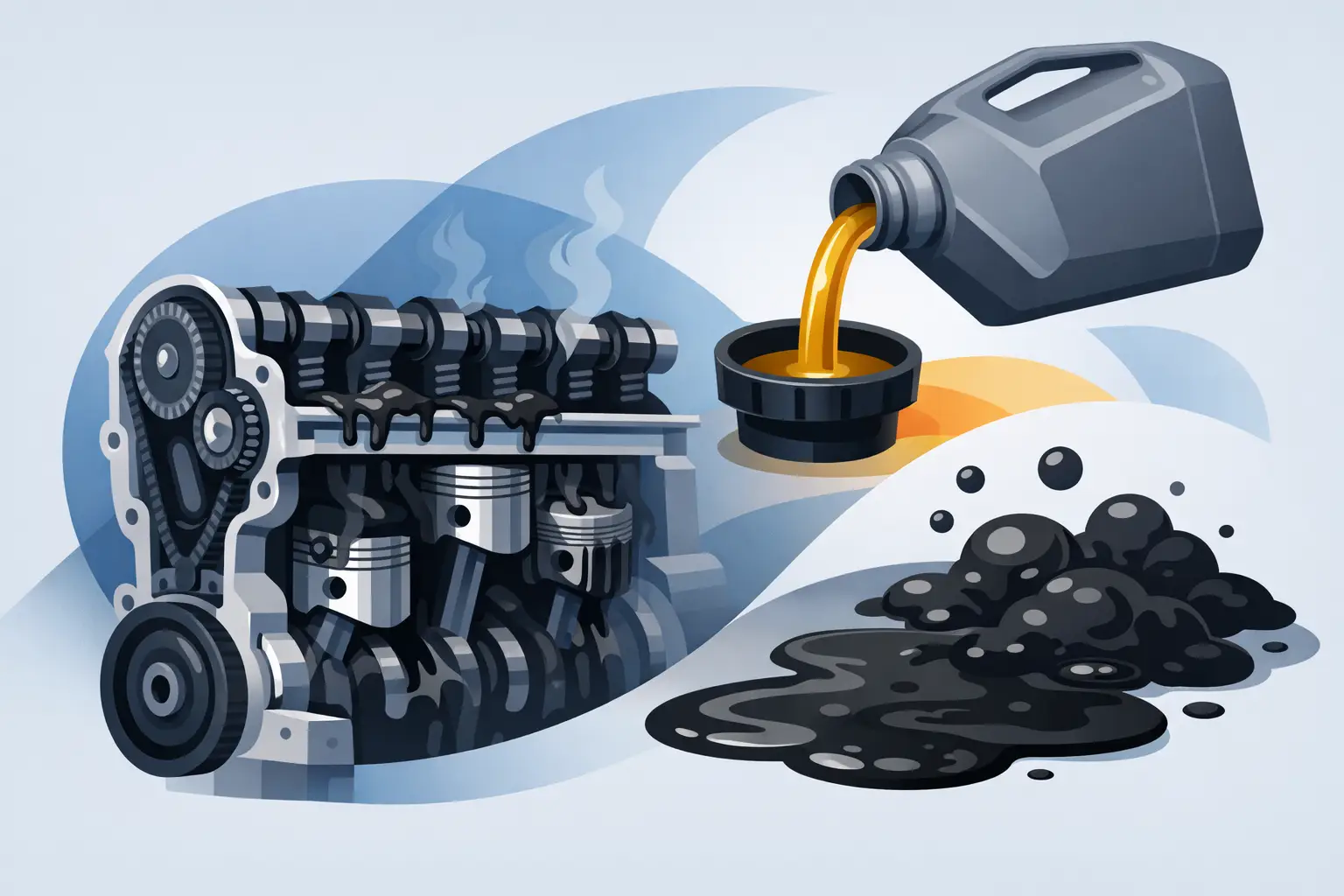
Oil sludge is a deposit problem that can involve degraded oil, contamination and unsuitable maintenance for the engine or duty. Visible material under a cap does not identify the cause or establish the condition of the complete engine. A workshop should document the finding, check the service history and investigate the relevant mechanical and operating factors before proposing a treatment.
This guide is an intake and diagnostic-record checklist. If the vehicle reports low oil pressure, serious overheating or another stop instruction, follow the manufacturer warning and obtain qualified assistance. Do not continue operating it simply to see whether fresh oil changes the symptom.
What Causes Oil Sludge to Form?
Engine oil has a finite working life. Its base oil and additive system are designed to manage heat, suspend contaminants, neutralize acids, and keep deposits from attaching to engine surfaces. As the oil ages or operates outside its intended conditions, those protective functions decline. Insoluble oxidation products, soot, moisture-related contamination, and fuel residues can then agglomerate into sludge.
Sludge is generally soft, sticky, or paste-like, unlike varnish, which is a hard brown or amber film. Both indicate thermal and chemical stress, but sludge is more likely to interfere with oil circulation. In severe cases, it can collect in the valve cover, oil pan, pickup screen, and oil-control passages.
High operating temperature and oxidation
Review overheating events, cooling-system repairs and the operating profile. Heat and oxidation are relevant to oil degradation, but a hot climate alone does not prove why a particular engine has deposits. Compare the actual service history with the applicable manufacturer schedule. Record the evidence that would support or rule out a cooling fault instead of attributing every deposit to UAE summer temperatures.
Short trips, moisture, and incomplete warm-up
Ask whether journeys are repeatedly short and whether idling dominates use. Ford scheduled-maintenance information, linked below as one manufacturer example, describes operating patterns that can dilute oil and raise its level. A creamy deposit under a cap can prompt further checks, but appearance alone cannot distinguish condensation from an internal coolant leak. Use the relevant engine procedure and record any supporting test results.
Missed oil changes and extended drain intervals
Compare the actual oil changes with the required time, distance or hours limit and any oil-life monitor instructions. Missing invoices, repeated top-ups and uncertain product identity create gaps that must remain visible in the record. Do not invent a corrective interval from an internet example. A revised maintenance plan needs the engine manufacturer procedure and a reason tied to this vehicle.
Wrong oil specification or mixed service fluids
Verify the exact oil product and requirement, including any OEM approval. Similar viscosity or synthetic branding does not establish equivalence. Keep the container or invoice details when the previous fill is uncertain. Product identification helps the investigation, but the discovery of a different brand or pack is not proof that mixing alone caused sludge.
Poor crankcase ventilation and mechanical contamination
Have the technician check the applicable crankcase ventilation components and investigate suspected coolant or other contamination using the engine procedure. Record measured findings and repair decisions. A blocked breather, internal leak or other mechanical fault needs its own corrective work; an oil purchase does not resolve that fault. Laboratory fluid analysis can support an investigation but does not replace diagnosis.
Why Oil Sludge Becomes a Service Risk
Sludge is not only a cleanliness issue. It can reduce oil flow through small passages and starve critical components during cold start or high-load operation. Variable valve timing solenoids may stick, hydraulic lash adjusters can become noisy, and a restricted pickup screen may reduce oil pressure. On turbocharged engines, deposits in the oil feed or return path can contribute to bearing distress and turbo failure.
Symptoms vary by engine design and severity. Common workshop findings include delayed oil-pressure warning light extinction, ticking at startup, timing-related fault codes, rough running linked to VVT operation, reduced turbo response, and visible deposits beneath the valve cover. None of these signs confirms sludge by itself, so technicians should avoid replacing parts solely on appearance or fault codes.
A structured inspection is more reliable:
- Verify oil level, viscosity condition, odor, and visible contamination.
- Review the actual service interval, oil specification, and top-up history.
- Inspect the valve train area, PCV system, and accessible drain-back passages.
- Check for fuel dilution, coolant intrusion, overheating history, and relevant diagnostic codes.
- Assess oil pressure and, where needed, inspect the oil pan and pickup screen.
Correcting a Sludged Engine Without Creating More Damage
The corrective plan depends on the engine and the verified condition. Obtain the manufacturer service instructions and have a qualified technician decide what inspection, component cleaning or repair is required. Avoid assigning “mild”, “moderate” or “severe” treatment solely from a photograph of the filler cap.
Do not run a universal sequence of flushes or shortened oil changes as a substitute for inspecting restricted oil flow or contamination. A cleaning product can have application restrictions, and a manufacturer may limit which cleaning procedures are permitted. Confirm those instructions before use. If inspection identifies a restricted pickup, damaged components or contamination, address that finding before returning the engine to service.
Record the approved repair and subsequent oil-service procedure, the oil and filter actually fitted, and the checks required before release. Explain remaining uncertainties to the customer. A clean-looking sample after an oil change does not establish that the original cause has been corrected.
Preventing Sludge in Workshop and Fleet Programs
Prevention starts with the correct oil, filter and documented service schedule for the actual use. Review whether the vehicle falls within a manufacturer-defined severe-service condition. Keep distance, time and engine hours where relevant. Use the manual or service system to set the next maintenance action rather than adopting one interval for every workshop customer.
Use quality filters, maintain the correct oil level, and record both mileage and engine hours where applicable. For fleets, oil analysis can help identify fuel dilution, viscosity loss, oxidation, coolant contamination, and elevated wear before sludge becomes visible. It also helps maintenance teams distinguish a lubricant issue from an engine fault or an unsuitable interval.
For mixed vehicle populations, a documented product matrix reduces errors at the point of service. MANNOL GCC supports this specification-first approach with vehicle and oil-selection assistance for workshops, dealers, and fleet buyers managing multiple applications.
When deposits are identified early, the most productive next step is to verify the root cause before selecting the corrective oil service. A clean engine depends less on a quick additive fix and more on the right fluid, the right interval, and a maintenance process that reflects how the equipment actually works.
Build an evidence packet for the technician
Keep four groups of information together: the owner complaint, the service record, the inspection findings and the action authorised. Date photographs and identify their location on the engine. Record oil level using the specified checking method, the last known oil product, changes in consumption and any overheating event. Avoid describing a suspected fault as confirmed on the invoice before the required checks are complete.
If a sample is taken, record the sampling point, oil service distance or hours, top-ups and the product in use. Cummins describes fluid analysis as a way to examine lubricant condition, wear and contamination; a report still needs a technician to connect it to the relevant engine. Keep the original result and the interpretation together. This makes a follow-up visit more useful than starting again from a verbal description.
Put the guide to work
Select products and prepare a quotation
Use the current vehicle requirement first, then send the confirmed specifications, quantities and preferred pack sizes to MANNOL GCC.
Official references
The editorial review used first-party manufacturer and industry-standard sources.
- Ford scheduled-maintenance informationA manufacturer example of usage-dependent maintenance, oil dilution and controlled flushing; not a schedule for every vehicle.
- Cummins fluid analysisExplains checking fluid condition, component wear and contamination; results require application-specific interpretation.
- API Motor Oil GuidePrimary guide to engine-oil labels, viscosity and performance categories.
- MANNOL Energy Premium 7908Official product record; keep specification, approval and recommendation wording distinct.
Frequently asked questions
Does a creamy filler-cap deposit prove an internal coolant leak?
No. It is an observation that needs context and the appropriate checks. Record the use pattern, oil and coolant condition, and have the technician distinguish possible causes using the engine procedure.
Will an engine flush always remove sludge safely?
There is no universal cleaning procedure. Confirm the engine condition, manufacturer instructions and product restrictions before treatment. A suspected oil-flow restriction or internal contamination needs diagnosis and appropriate corrective work.
Can oil analysis help identify the problem?
It can provide information about lubricant condition, wear and contamination. Give the laboratory the product, sampling details, service hours or distance and top-ups; the result still needs application-specific interpretation.
What should a fleet save after a sludge inspection?
Save the complaint, dated findings, service history, product identity, relevant test results and authorised action. Record unresolved questions and the checks required before the vehicle is returned to service.
MANNOL GCC enquiries
Send the requirement with your product enquiry
Share the application, product reference, quantity and destination so the team can review the request and confirm the offer.